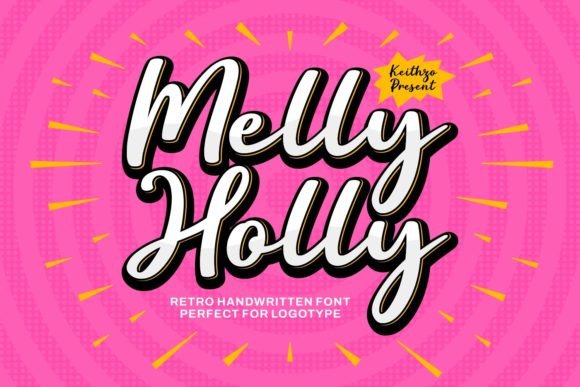
Melly Holly: A Modern Handwritten Font for Creative Branding
I recently had the chance to test Melly Holly, a script handwritten font, in a real branding project for a local artisanal candle shop. The goal was to create a warm, inviting identity that felt handcrafted and personal. As I sat down with my brand board open, I knew I needed something more than just another generic typeface — I needed a font that could tell a story. That’s when I pulled up Melly Holly.
Melly Holly on Product Packaging
The first place I tried Melly Holly was on product labels. These candles are meant to feel like little love letters to self-care, so I wanted the typography to reflect that soft, personal touch. I paired it with a minimalist sans serif for body copy and let Melly Holly take center stage for the product names. The result? It was stunning. The cursive strokes added elegance without feeling too formal, and the modern handwritten elements gave it an authentic, crafted vibe.
What stood out was how well Melly Holly handled both short phrases and slightly longer descriptions when used as an accent. I found myself using it for taglines and brand mottos rather than large blocks of text, which makes sense given its decorative nature. If you're working on product packaging for anything from cosmetics to gourmet food, this is a solid choice for a display or headline font.
Melly Holly in Logo Design
Next, I tested Melly Holly in logo concepts. The client wanted something that felt personal yet professional. I created three variations: one with Melly Holly alone, one combined with a bold serif, and one with a clean sans serif. The version using Melly Holly as the main logotype won by a landslide. It felt approachable, yet refined enough to work in both print and digital formats.
One thing to note is that Melly Holly works best when used sparingly in logos. Because of its fluid, script style, it can become too busy if overused. But when applied to a simple, elegant wordmark, it adds character and charm. For a logo design project where personality matters, especially in lifestyle or creative industries, this font is a strong contender.
Melly Holly for Social Media Graphics
Social media branding is often about making an impression quickly. I used Melly Holly across Instagram posts, stories, and even email headers. The font performed beautifully in hero headlines and call-to-action buttons. Its cursive nature made the content feel more personal and human, which aligned perfectly with the brand’s mission of promoting mindfulness and wellness.
I did notice that in smaller sizes or at lower resolutions, some of the fine details in Melly Holly started to blur. So if you're designing for mobile-first platforms, be sure to test how it looks on different screen sizes. For most social media layouts, though, it holds up well when used as a headline or short phrase. Just keep your contrast high and avoid over-layering effects to maintain clarity.
Font Pairing with Melly Holly
As a seasoned designer, I always look for fonts that pair well with others. In this case, Melly Holly worked exceptionally well with a light-weight sans serif like Lato or a medium-weight serif such as Merriweather. The contrast between the fluidity of Melly Holly and the structured balance of a serif or sans helped create visual harmony without competing for attention.
I recommend using Melly Holly as the primary script in your brand system and supporting it with a neutral base font. This ensures legibility while still letting the handwritten font shine where it counts — like in brand slogans, headings, and signature lines. Avoid pairing it with other script or handwritten fonts unless you're going for a specific layered aesthetic; usually, one is enough to carry the mood.
Melly Holly for Business Cards and Print Assets
When I moved into print assets, I used Melly Holly for the business card name line and contact info accents. The ink bleed and texture of the paper brought out the organic qualities of the Script Handwritten style. It looked premium and intentional. I also used it in printed flyers and posters for in-store promotions — again, keeping it to headlines and short statements.
On printed materials, the weight of the strokes and the openness of the letterforms really helped. It didn’t get lost in low-quality prints the way some delicate scripts do. That said, if you’re printing in black and white or grayscale, double-check the stroke consistency to ensure there's no unintended fading or loss of detail.
Testing Melly Holly in Web Design
For the website, I used Melly Holly in the hero section and navigation bar. I limited its use to key sections because of the potential readability issues in extended text. However, for a homepage header or a tagline, it was perfect. I also used it for button labels and featured product titles — all places where a creative font can add flair without overwhelming the user experience.
Web designers should consider loading Melly Holly via a webfont kit if they plan to use it extensively. While it loads smoothly on most systems, performance might vary depending on file size and format. Always test load times and fallbacks to make sure your site remains fast and accessible.
When Not to Use Melly Holly
Despite its versatility, Melly Holly isn’t a one-size-fits-all solution. It’s not ideal for long paragraphs or dense body copy. I noticed that reading comfort dropped significantly when using it for extended text in brochures or website content. Stick to using it for display purposes — headlines, subheadings, taglines, and decorative elements.
Also, if your brand leans heavily into corporate professionalism or minimalism, this might not be the right fit. Melly Holly has a distinct personality that works better for lifestyle brands, handmade products, or any business looking to inject warmth and creativity into their visuals.
Checking Commercial Licensing Before Use
Before finalizing the project, I made sure to review the commercial licensing terms for Melly Holly. Like many Fonts, it’s essential to confirm whether it allows for use in merchandise, websites, templates, and print-on-demand items. Some free script fonts restrict commercial usage, but since Melly Holly is clearly positioned as a premium option, it’s worth investing in the proper license to avoid legal hiccups later.
If you're planning to integrate it into your own brand identity or packaging design, always check the licensing agreement for specifics on what you can and cannot do. It might save you time (and money) down the road.
Real-World Applications and Final Thoughts
In the end, the client loved the direction we took with Melly Holly. It became the backbone of their new brand identity, appearing on everything from candle jars to Instagram stories. The font helped them stand out in a crowded market and gave their brand a unique voice.
If you're working on a boutique identity project, a café refresh, or any kind of branding that needs a touch of personality, give Melly Holly a try. Just remember to treat it like the display or accent font it is. Test it in multiple contexts before committing — mockups, print samples, and web previews will help you see how it behaves under different conditions.
And don’t forget: while it’s beautiful and expressive, always balance it with more readable options to keep your design functional and accessible. Whether you're crafting design assets for a small business or experimenting with modern typography in your latest project, Melly Holly is a font that brings both creativity and character to the table.